

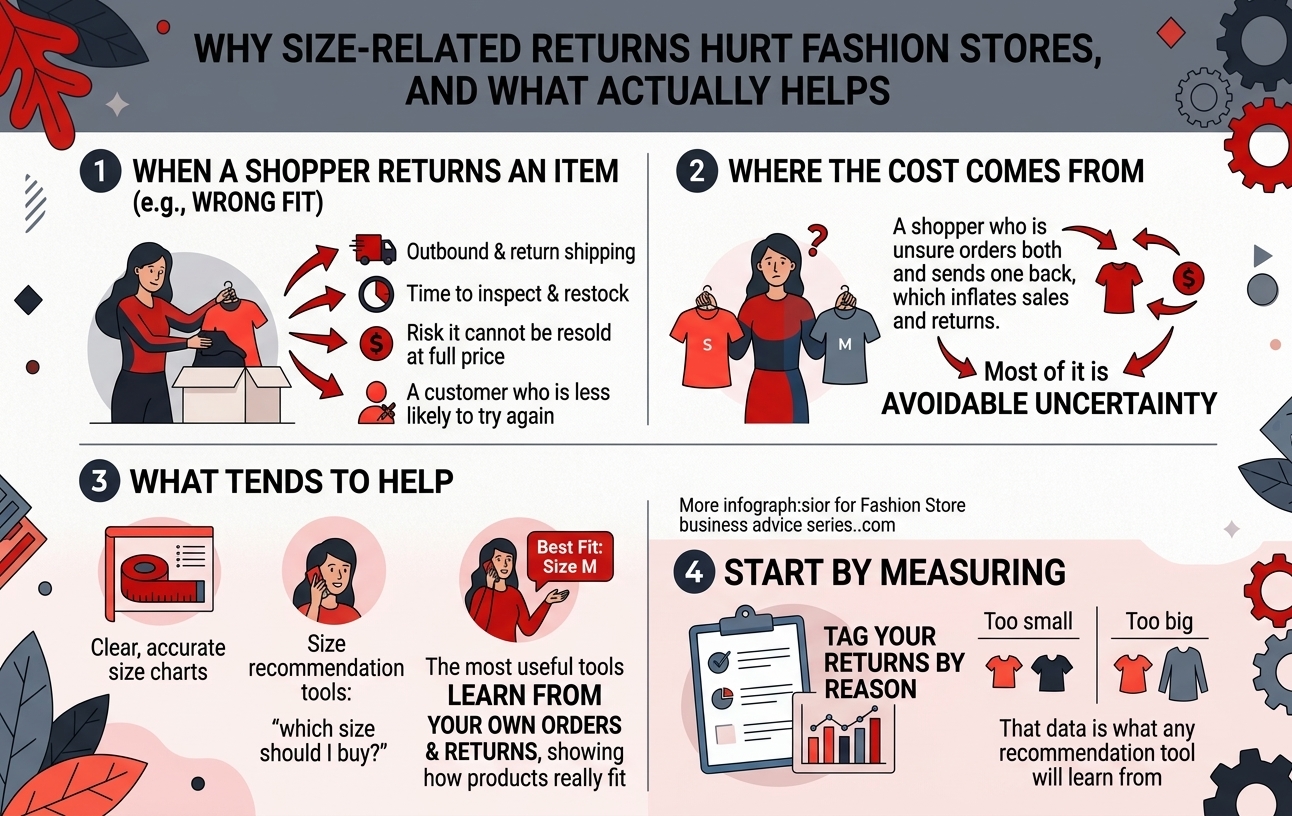
When a shopper returns an item because it did not fit, the store pays more than postage. There is the outbound and return shipping, the time to inspect and restock the item, the risk that it cannot be resold at full price, and a customer who is less likely to try again.
Where the cost comes from
Most of it is avoidable uncertainty. A shopper who is unsure between two sizes often orders both and sends one back, which inflates both your sales and your returns.
What tends to help
Clear, accurate size charts are the baseline. On top of that, a size recommendation tool answers the question shoppers actually have: "which size should I buy?". The most useful ones learn from your own orders and returns, because that shows how your products really fit rather than how the chart says they should.
Start by measuring
Before changing anything, tag your returns by reason and track "too small" and "too big" separately. That data is what any recommendation tool will learn from, and it shows you which products to look at first.